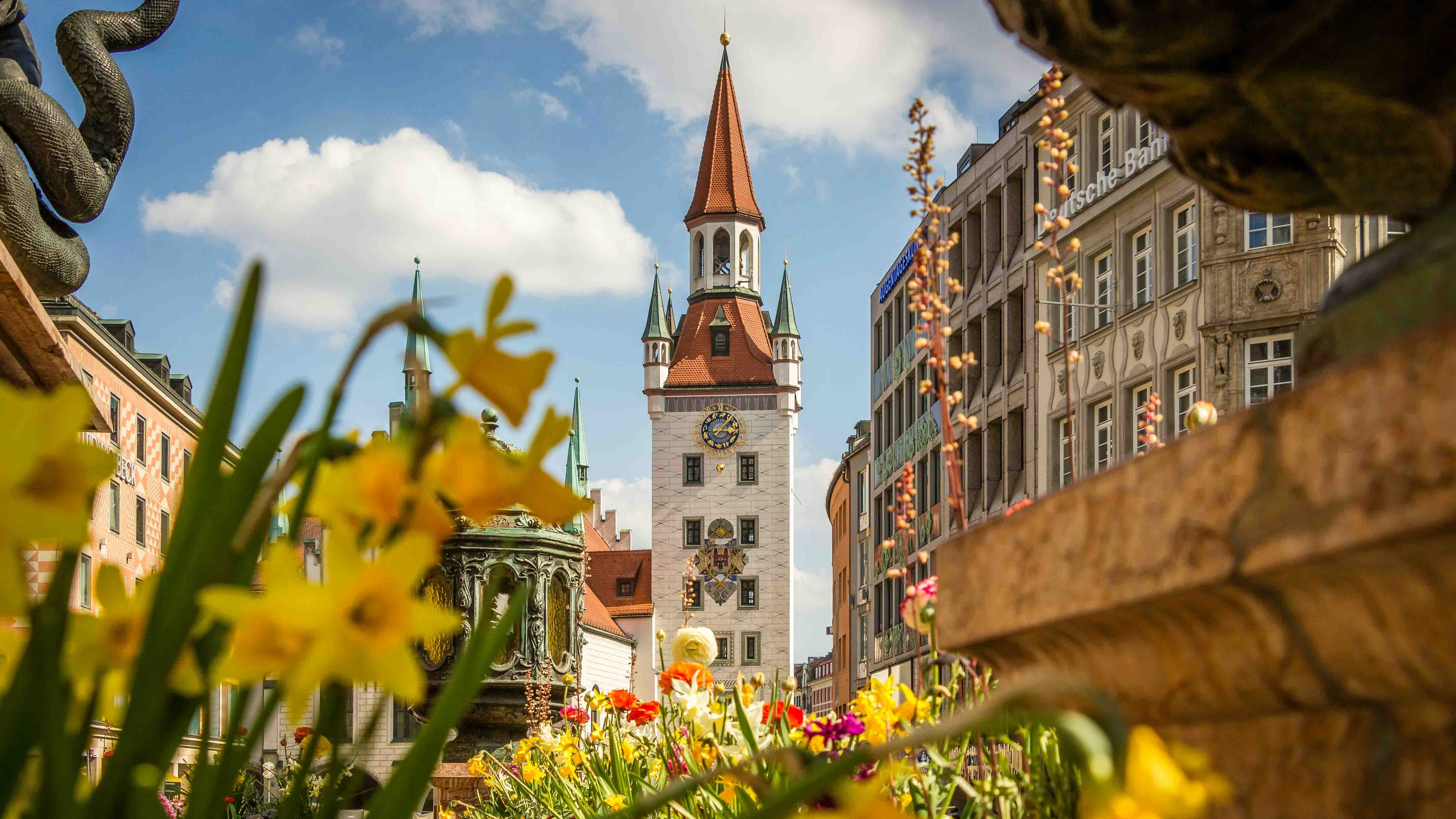
Most people associate Munich with Oktoberfest: the lederhosen, the beer steins, and the crowded tents. Oktoberfest is a great party, but is it the best time to visit Munich?
I just spent a week in Munich in July, and what I found was a city that felt entirely different from the one you have probably imagined. Quieter in the best way. Warmer and longer days that stretch past 9 p.m. Beer gardens full of locals and an Old Town that genuinely rewards you for just walking it. Munich in summer is not a secret, but it feels like one, and that is exactly what makes it worth your next trip.
Why Munich Deserves a Spot on Your List
There is a version of Europe that feels like it was built for photographs, and then there is Munich, which was built for living. The Bavarian capital has world-class museums, an extraordinary culinary culture, one of the greatest urban parks on Earth, and a historic city-center that you could walk for days and still find something new. It is also (in my opinion) one of the most livable, organized, and genuinely pleasant cities in Europe, which makes it a rare thing: a place that is easy to enjoy without a guidebook in your hand.
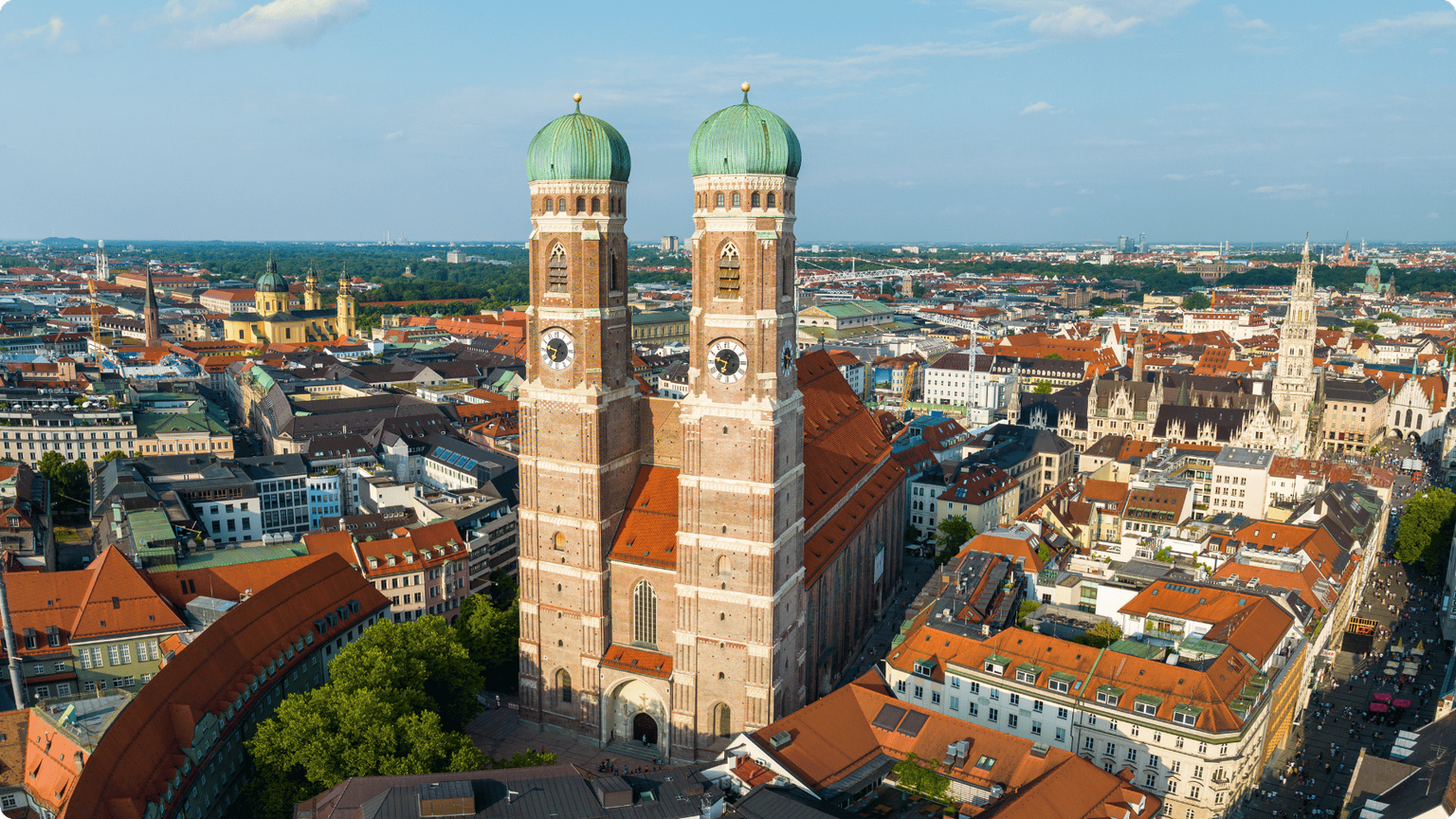
The history here runs deep. The Residenz, the former palace of the Bavarian monarchs, is one of the most remarkable royal complexes in Europe. With its dozens of rooms, courtyard gardens, and treasuries, it takes an entire day to move through the palace properly. Marienplatz, the central square, has anchored Munich life for centuries with its world-famous Rathaus-Glockenspiel drawing crowds at every chime. Odeonsplatz, just a short walk north, is the kind of grand square that stops you mid-stride. And the Viktualienmarkt, the city's beloved open-air food market, is the most honest expression of Munich's food culture: local farmers, Bavarian cheeses, fresh-pulled radishes, and a central beer garden where you can sit and chat with locals over a pint like you've been there for years.
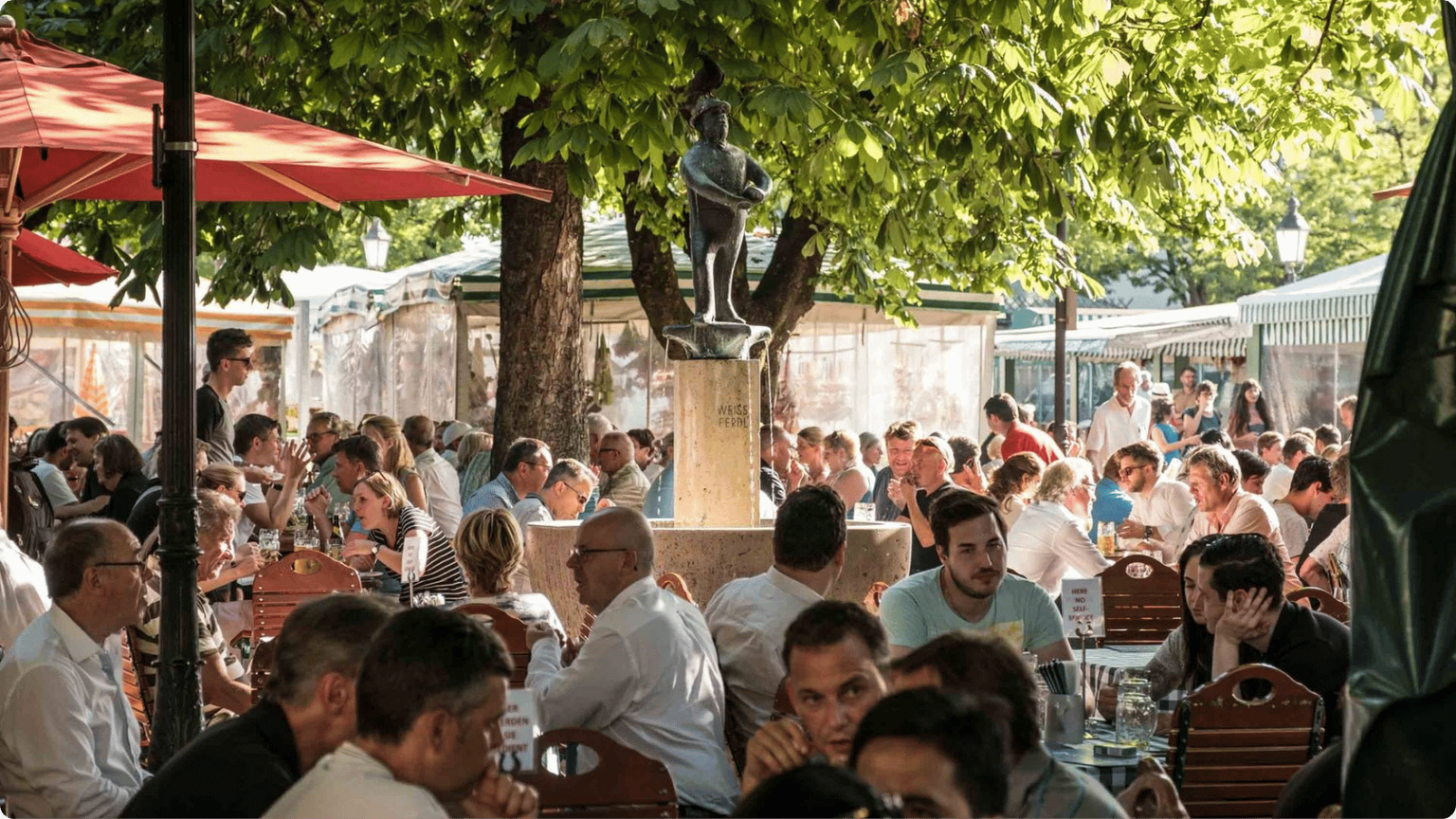
Image credit: munich.travel
Munich is also a city of serious cultural ambition. The Deutsches Museum is one of the finest science and technology museums in the world. The Alte Pinakothek, Neue Pinakothek, and Pinakothek der Moderne form an art triangle that rivals anything in Paris or Amsterdam. BMW World, a short U-Bahn ride north, is worth the trip for design lovers even if you have no interest in cars. There is always more Munich to find than a week can hold.
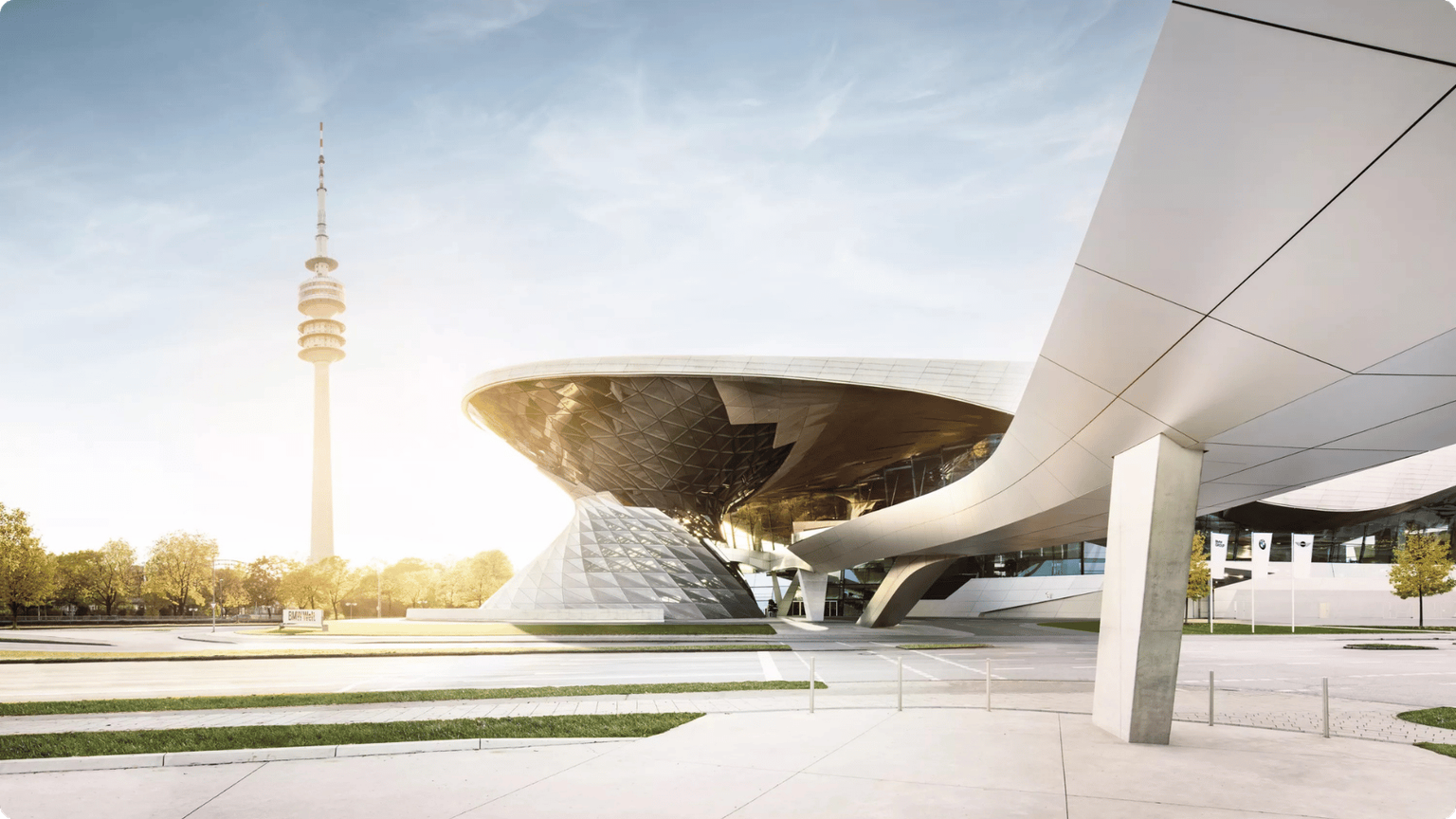
Image credit: bmw-welt.com
Why Summer Is the Right Time to Go
Summer in Munich runs roughly from June through August. Temperatures typically land between 65° and 80°F (18° and 27°C), which is warm enough to be genuinely comfortable but rarely so hot that you are miserable. The key here is that the sun sets after 9pm giving you hours of extra light to explore the city and its surroundings.
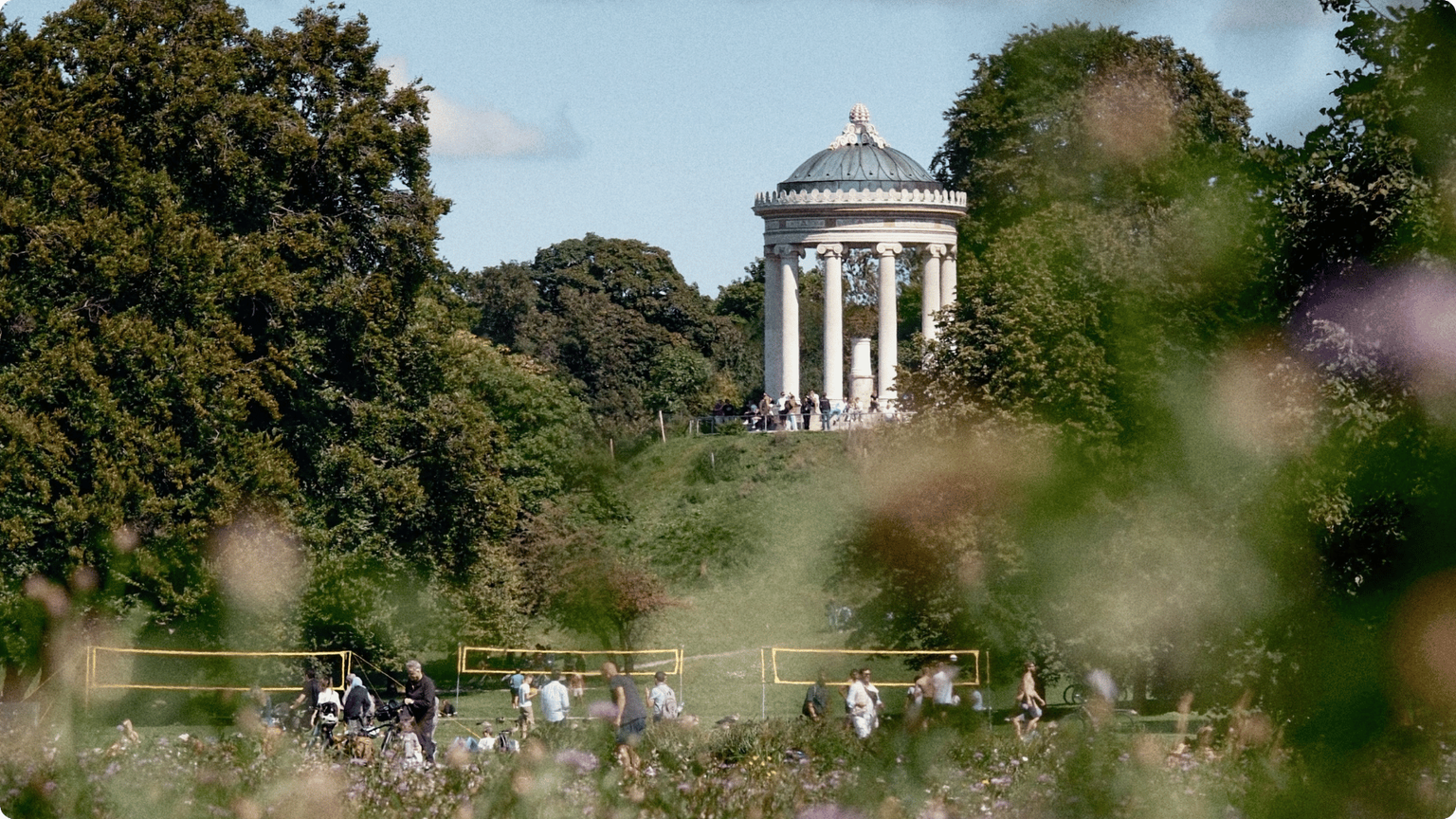
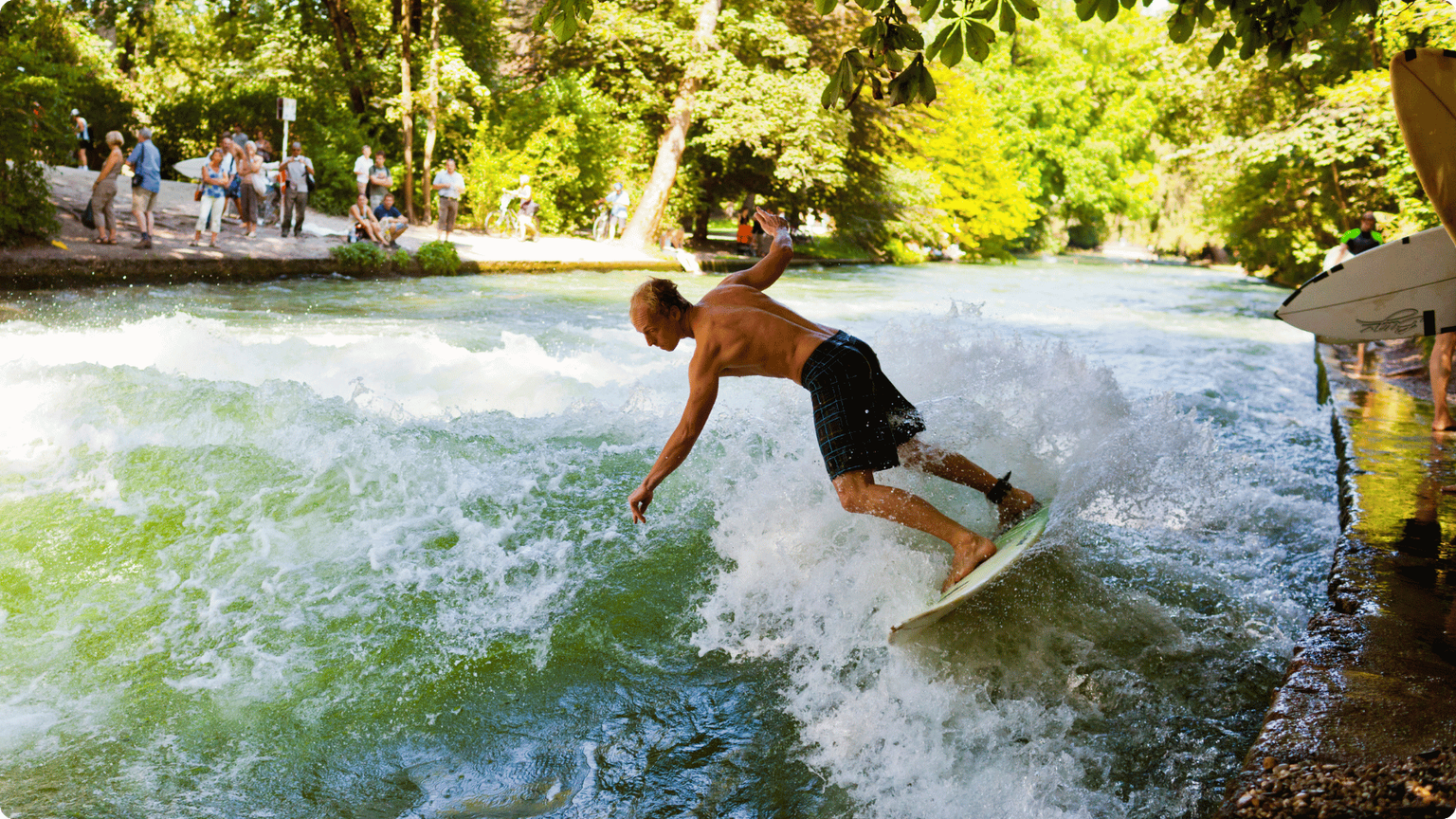
The English Garden earns its reputation entirely in summer. At more than 900 acres, it is one of the largest urban parks in the world, larger than New York's Central Park, and in warm weather it transforms into the social heart of the city. Locals sunbathe on the meadows, rent paddleboats on the lake, and float down the Eisbach stream. The Chinesischer Turm, a tiered Chinese tower at the garden's center, anchors one of Munich's most beloved beer gardens. And at the park's southern edge, surfers ride a standing river wave year-round, but it is in summer that crowds gather on the bridge to watch, which is genuinely one of the more surreal and wonderful things you will see in any European city.
Summer also brings Munich's opera season. The Münchner Opernfestspiele, the Munich Opera Festival, runs through July and draws world-class productions to the Bavarian State Opera. If you have any interest in classical music, the timing is worth building a trip around. Outdoor concerts, theater in the parks, and festivals fill the calendar from June onward.
Then there is the practical case: summer is simply a better time to visit than Oktoberfest season if you are not specifically coming for Oktoberfest. Hotel prices are more reasonable, the streets are full of life without being overwhelmed, and you can actually get a table at the restaurants you want.
Where to Stay: The Case for the Platzl Hotel
Getting the location right in Munich matters more than in most cities, because Old Town distances are walkable in a way that makes the right address genuinely transformative. I stayed for a week at the Platzl Hotel, and I would go back in a heartbeat.
The Platzl is a 4-star hotel on Sparkassenstraße, steps from Marienplatz in the heart of the historic Old Town. That proximity is the whole point: Marienplatz is a two-minute walk. The Residenz is around the corner. Odeonsplatz and the Bavarian State Opera are just beyond that. The English Garden's southern edge is reachable on foot. You spend your days moving through Munich and come back to a hotel that is already inside the best of it.
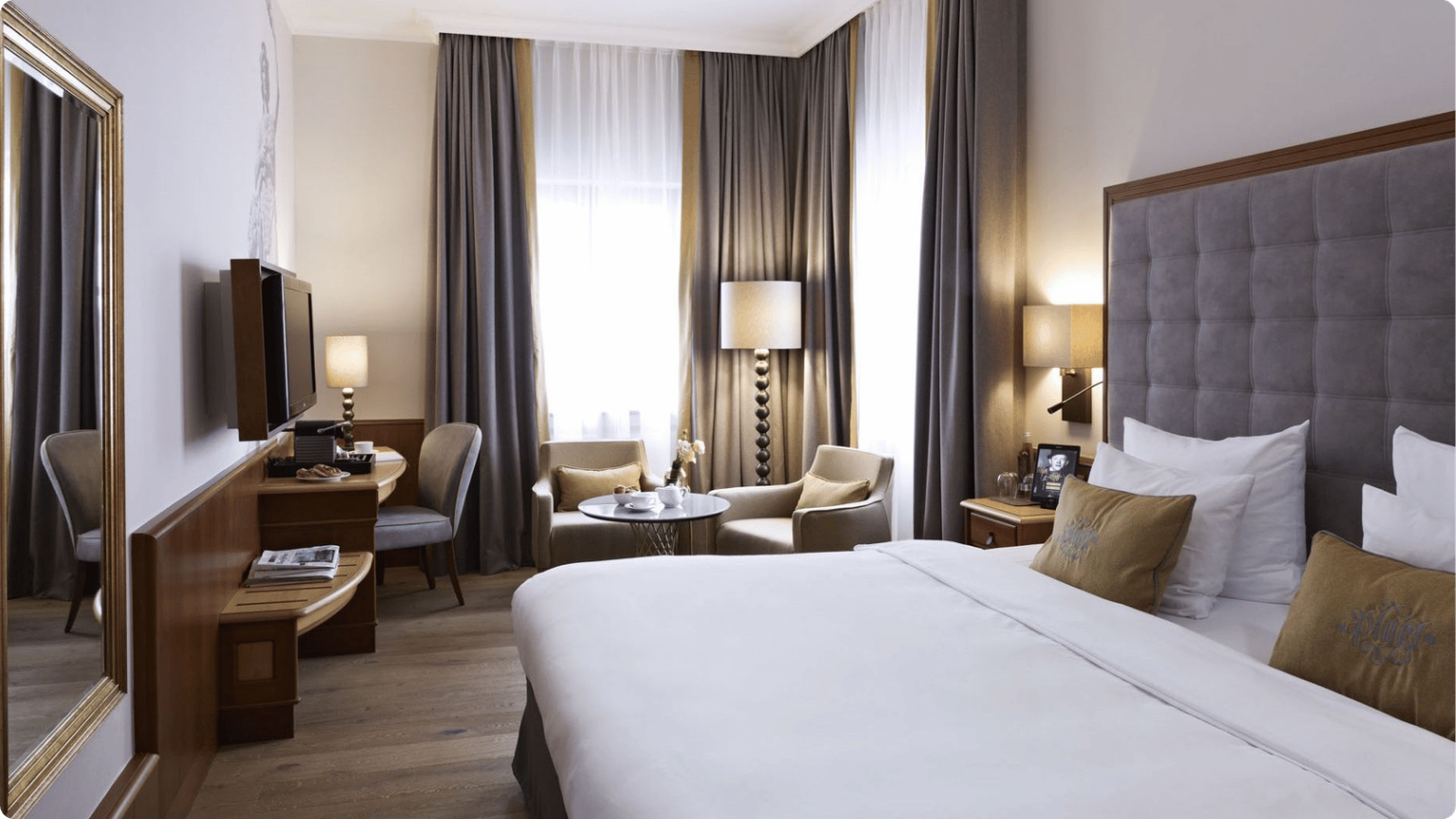
Image credit: Platzl Hotel
What sets the Platzl apart from a purely transactional city-center hotel is that it is genuinely rooted in Bavarian tradition while delivering every modern comfort you want. The rooms are designed with Bavarian style elements, proper attention to detail, and modern amenities throughout. The hotel is family-run, and that shows in the warmth of how it operates, the care taken in its restaurants, and the way the staff know the city and actually want to help you see it well.
The dining situation at the Platzl deserves its own paragraph. The Pfistermühle, the hotel's fine dining restaurant, is set inside the lovingly restored vaulted cellar of a former ducal flour mill dating to 1573. The kitchen produces refined Bavarian cuisine with regional, seasonal products, paired with an excellent selection of Franconian wines and beer from the family-owned Ayinger Brewery.
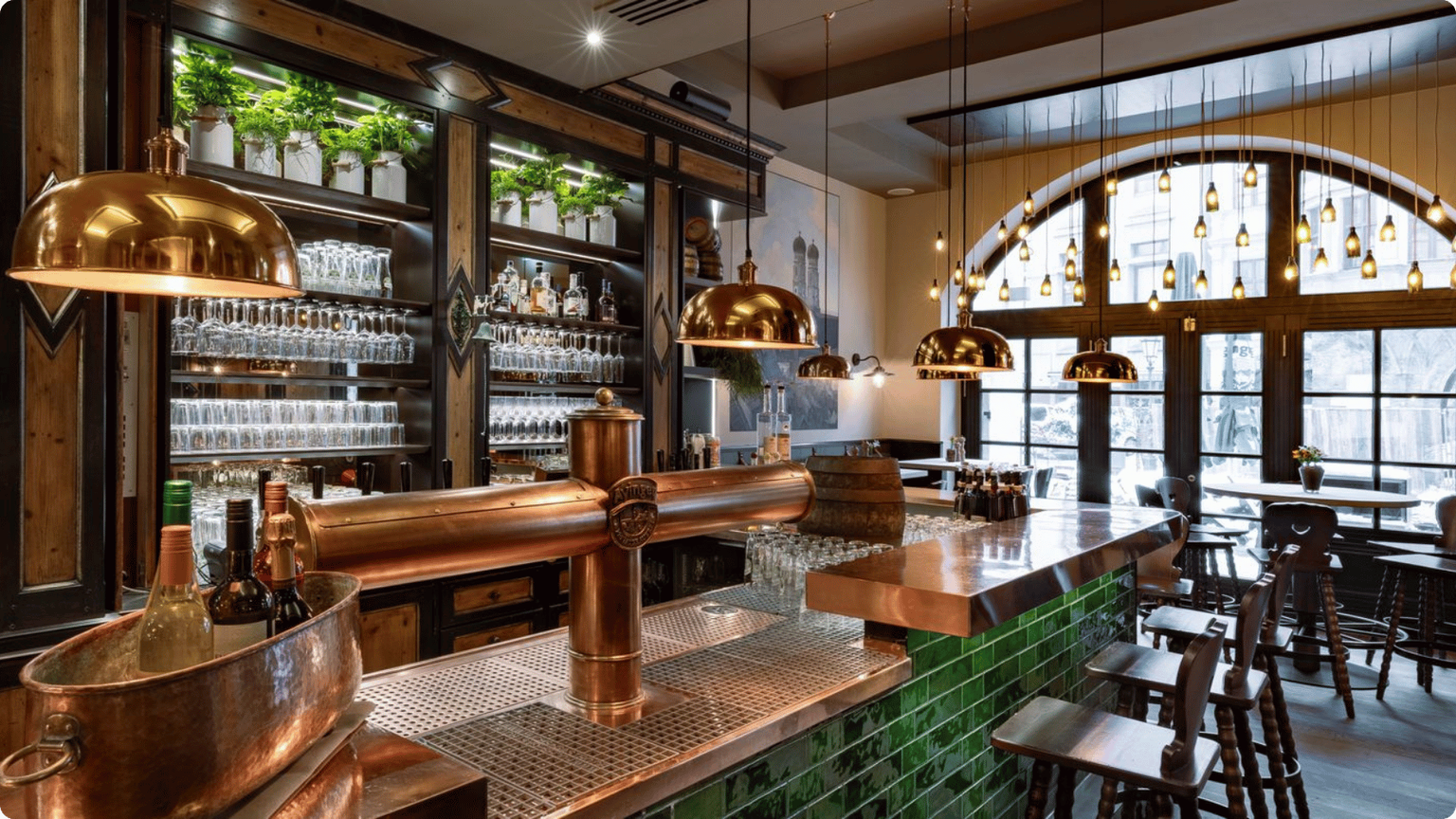
Image credit: Platzl Hotel
The Wirtshaus Ayinger am Platzl, a lively pub on the property, pours seven varieties of Ayinger beer and serves creative Bavarian classics in a setting that captures something genuinely Munich. In summer, the Pfistermühle's terrace opens for outdoor dining, and the Josefa Karree courtyard offers the ideal spot for an afternoon coffee or a nightcap under the sky.
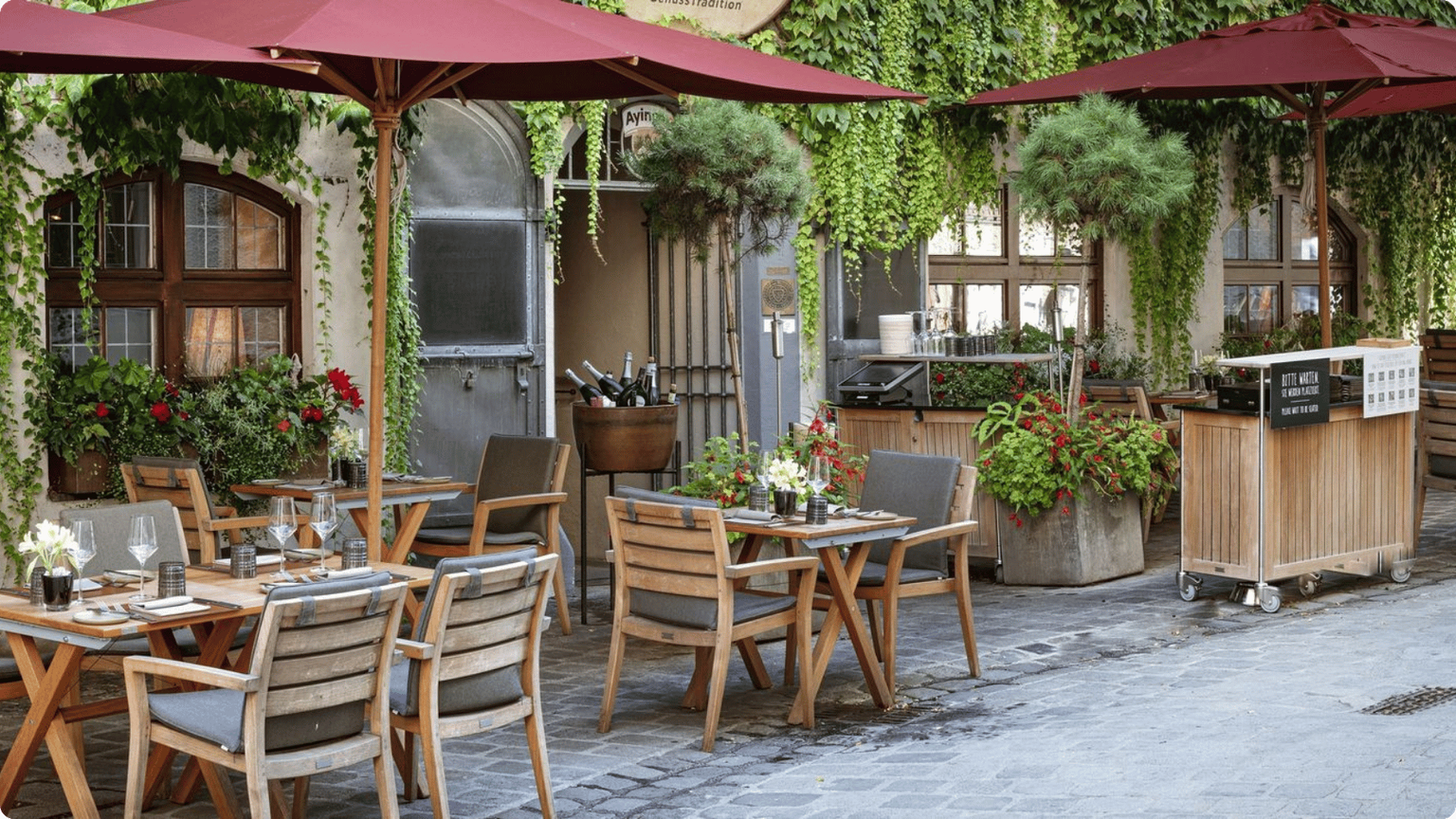
Image credit: Platzl Hotel
The hotel also has an amazing rooftop sauna and spa with panoramic views of Munich which I thoroughly enjoyed after checking-in and unpacking. It is the kind of property that makes a trip feel settled from the moment you arrive.
A Few Days Well Spent
If you have four to seven days, Munich will fill them without effort. Start with the Old Town: Marienplatz, the Viktualienmarkt, the Hofbräuhaus (yes, it is touristy; go anyway), and an afternoon at the Residenz. Spend a morning walking through the English Garden and plan to stay for lunch at one of the beer gardens. Reserve one day for the Pinakotheken if art is your thing, or BMW World if it is not. Take a day trip to Neuschwanstein Castle, about two hours by train and bus, which is one of the more spectacular pieces of architecture you will encounter anywhere in Bavaria. If you have more time, Salzburg is 90 minutes by train and makes an effortless addition.
Book dinner at the Pfistermühle at least once. Wander back to the Platzl at the end of a long day knowing you do not need a cab.
Munich is waiting. It rewards the curious, treats the well-rested, and sends everyone home with stories. That is the whole point of a trip worth taking.